> For the complete documentation index, see [llms.txt](https://docs.yanusstudio.com/llms.txt). Markdown versions of documentation pages are available by appending `.md` to page URLs; this page is available as [Markdown](https://docs.yanusstudio.com/yanusretarget/custom-mode.md).
# Custom Mode
This mode is specifically designed to streamline the animation process for custom models. Additionally, we have integrated several convenient features to enhance workflow efficiency.
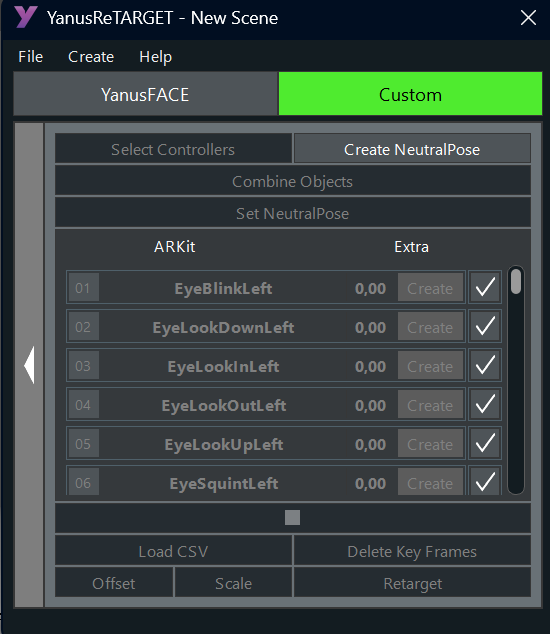
Custom Mode
### Step-by-Step Guide
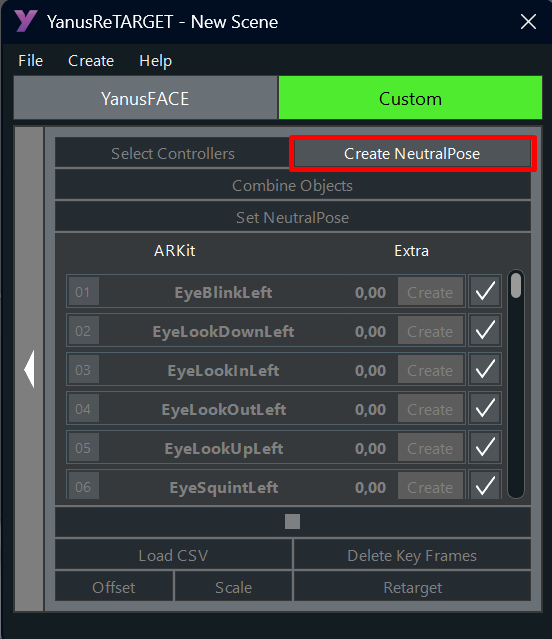
1. **Creating NeutralPose**
> This step is crucial to ensure the proper functioning of the entire mode. To help you better understand how to create a correct **NeutralPose**, please refer to the guide.
Create NeutralPose
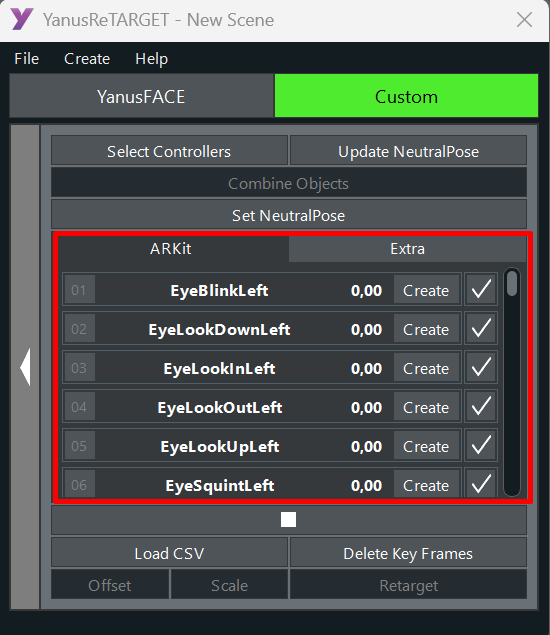
2. **Pose Creation**\
In this section, you can set parameters for different poses. There are two main pose presets you will work with: **ARKit Preset** and **Extra Preset**.
* **ARKit Preset**: Contains all the default poses that can be easily animated using MoCap data. These poses are standard and widely supported.
* **Extra Preset**: This is where you can add fully custom poses. These poses can have multiple preferred directions for application. You can prepare your model to connect with AI models that generate animations or use it if your MoCap data includes poses that are not part of the default ARKit set. These custom poses can then be linked to `ExtraPoses` for more flexible animation control.
* **Attributes and BlendShapes Tracking**: The **Pose Creation** process supports tracking both **Attributes** and **BlendShapes**. This ensures that your poses can fully utilize both controller parameters and detailed facial expressions, making it versatile for different animation needs.
PoseCreator
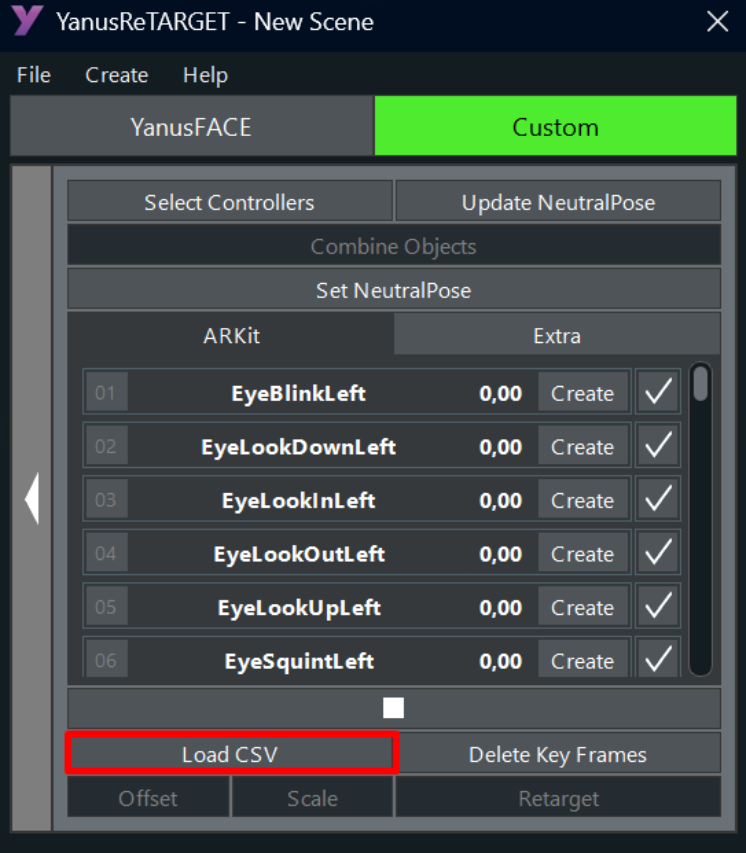
1. **Load CSV**
> We utilize **PreBaking technology**, which allows importing MoCap data in real-time, significantly reducing the time required for data import.
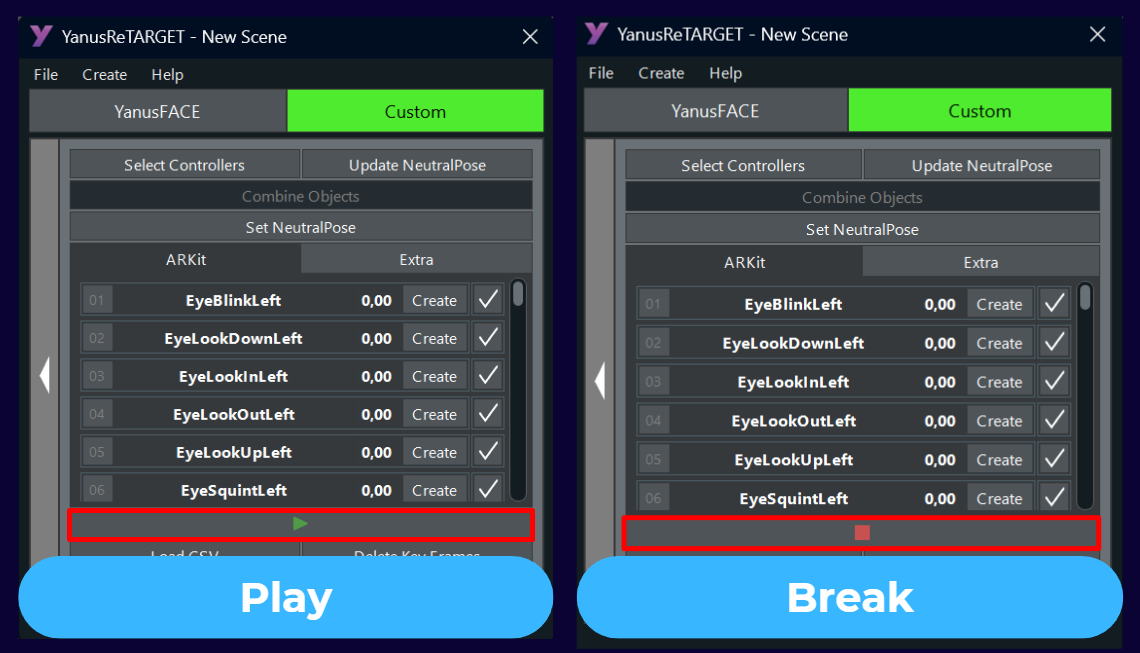
2. **Play/Break**
> This feature controls the data flow, either starting or interrupting the PreBaking process.
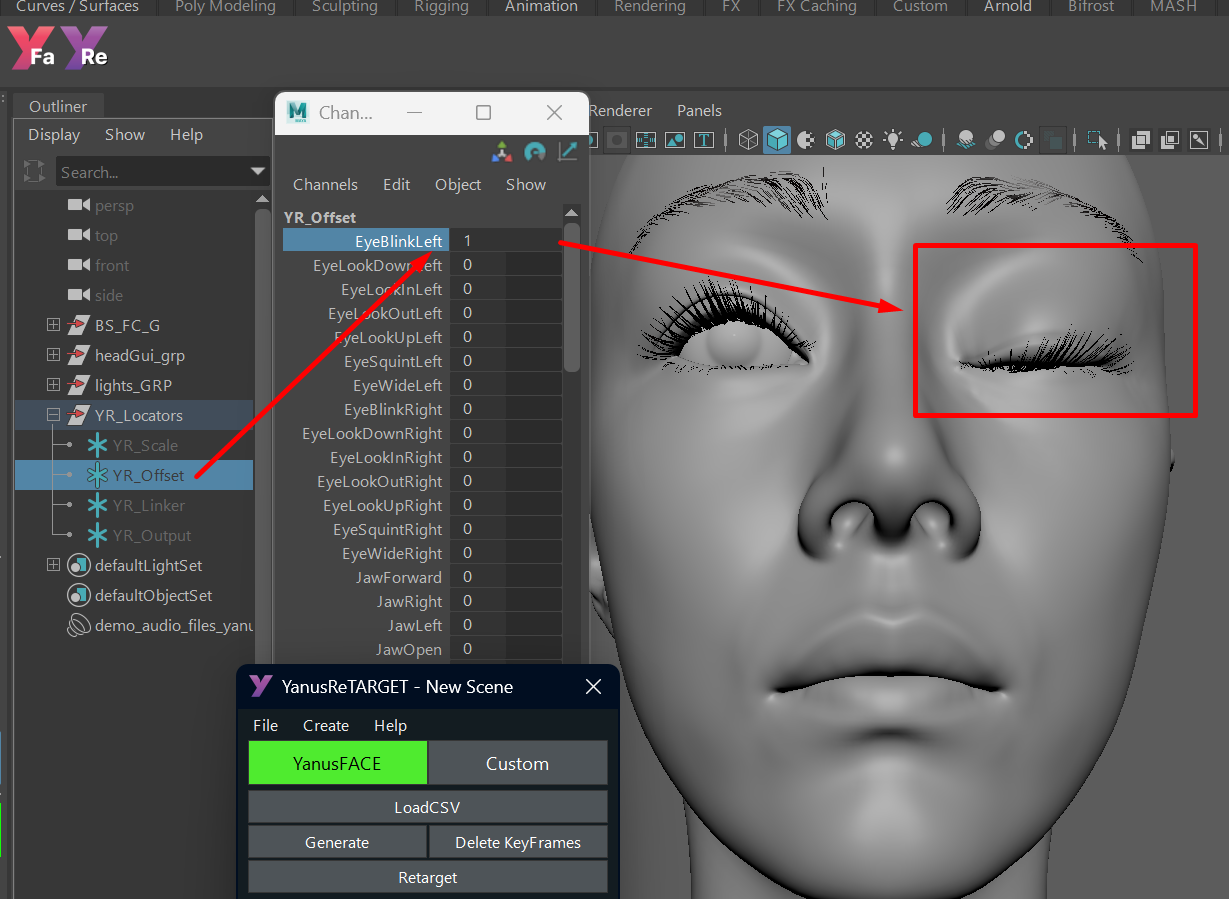
3. **Editing Animations**
> Use the scale and offset options for the locators to adjust the animations.
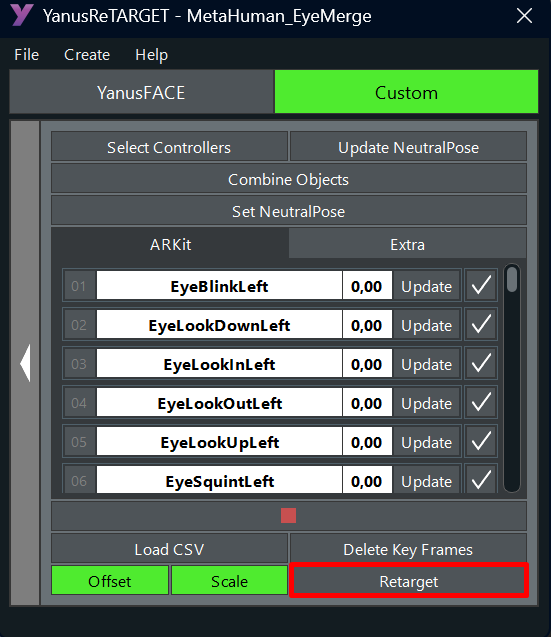
4. **Retarget**
> Easily transfer keyframes from MoCap data to your rig.